
Where to Stay in Vancouver
Your guide to the best areas and accommodation types
Vancouver sprawls across five distinct zones: the glass-tower Downtown core, the heritage brick lanes of Gastown, the waterfront luxury of Coal Harbour, the lively West End beside English Bay, and the laid-back North Shore across Burrard Inlet. Each neighbourhood carries its own atmosphere. Each carries its own price tag.
Coal Harbour and Downtown command the highest rates in the city. Gastown and Yaletown offer boutique character at a slight premium over the city average. The West End and North Shore deliver quieter surroundings with beach or mountain access.
Budget
CAD $35-80 per night for hostels and basic hotels
Mid-Range
CAD $150-280 per night for 3-4 star hotels and boutique properties
Luxury
CAD $350-650 per night for 5-star and premium waterfront properties
Where to Stay in Vancouver
Hand-picked hotels across price tiers for every visitor.
Our Top Picks
The highest-rated hotel in each price range, selected from all neighborhoods.
Top Pick: Downtown Core
Budget
Hotel Willo
"Location is good. Is super clean and you can get free coffee in the morning.near…"
Gym
Private parking
Luggage storage
Conference room
Downtown Core
Check prices on Trip.com →
Top Pick: Downtown Core
Mid Range
Paradox Vancouver
"The location is super convenient! You can walk to Stanley Park, and it's just a…"
Indoor swimming pool
Hiking
Spa
Massage room
Downtown Core
Check prices on Trip.com →
Top Pick: Downtown Core
Luxury
Fairmont Pacific Rim
"We asked the concierge to make restaurant reservations and some questions about…"
Outdoor swimming pool
Sauna
Spa
Massage room
Downtown Core
Check prices on Trip.com →
Best Areas to Stay
Each neighborhood has its own character. Find the one that matches your travel style.
Hotel recommendations verified
Downtown Core
All tiers
Vancouver's commercial and entertainment spine runs along Robson and Georgia streets, where steel-and-glass towers reflect grey Pacific skies. Rogers Arena, BC Place, the Vancouver Art Gallery, and Pacific Centre mall all sit within a ten-minute walk. The SkyTrain connects the neighbourhood to the airport in under 30 minutes. Granville Street's bar strip brings noise and crowds on weekend evenings. The sheer concentration of amenities makes Downtown the most practical base for short stays.
- ✓ Widest range of accommodation tiers in the city
- ✓ SkyTrain and major bus routes on the doorstep
- ✓ Walking distance to most major sights
- ✓ 24-hour pharmacies, grocers, and convenience stores
- ✓ Best restaurant variety outside Gastown
- ✗ Granville Street bar noise carries until 2am on weekends
- ✗ Parking is expensive and difficult
- ✗ Chain hotel towers feel impersonal at lower price points
Recommended places to stay in Downtown Core
Budget
Hotel Willo
"Location is good. Is super clean and you can get free coffee in the morning.near…"
Gym
Private parking
Luggage storage
Conference room
✓ Verified
Check prices on Trip.com →
Mid Range
Paradox Vancouver
"The location is super convenient! You can walk to Stanley Park, and it's just a…"
Indoor swimming pool
Hiking
Spa
Massage room
✓ Verified
Check prices on Trip.com →
Luxury
Fairmont Pacific Rim
"We asked the concierge to make restaurant reservations and some questions about…"
Outdoor swimming pool
Sauna
Spa
Massage room
✓ Verified
Check prices on Trip.com →
Luxury
Loden Vancouver
"The location of the hotel is very core, next to the trump building. The hotel se…"
Sauna
Spa
Massage room
Gym
✓ Verified
Check prices on Trip.com →
"Standout! From the minute I exited my Uber upon arrival to the minute I left I fe…"
Skiing
Hiking
Spa
Massage room
✓ Verified
Check prices on Trip.com →
Coal Harbour
Mid-range to Luxury
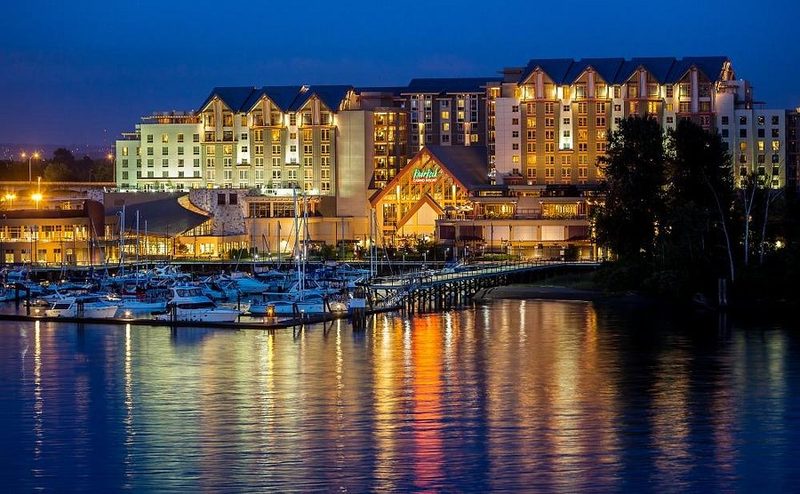
The seawall here carries the smell of salt water and fresh cedar. Floatplanes buzz over the inlet every few minutes. The snowcapped North Shore mountains rise across the water like a theatre backdrop. Coal Harbour is Vancouver's most unambiguously premium waterfront address: luxury towers line the shore and the neighbourhood is effectively anchored by the Fairmont Pacific Rim and Pan Pacific at Canada Place. Budget accommodation is absent. This is a neighbourhood for travelers who want the view to justify the rate.
- ✓ Direct seawall access into Stanley Park
- ✓ Floatplane and cruise-ship terminals at Canada Place
- ✓ Vancouver Convention Centre steps away
- ✓ The clearest unobstructed waterfront views in the city
- ✓ Quieter after dark than the Granville bar strip
- ✗ No genuine budget options anywhere in the neighbourhood
- ✗ Restaurant choices thin out more than a block from the waterfront
Recommended places to stay in Coal Harbour
"The hotel is conveniently located near a bus stop and close to the airport, thou…"
Luggage storage
Conference room
Wi-Fi in public areas
Laundry room
✓ Verified
Check prices on Trip.com →
Mid Range
Hyatt Regency Vancouver
"Location: Fantastic! Canada Place, Gastown, and Stanley Park are all within easy…"
Outdoor swimming pool
Sauna
Spa
Gym
✓ Verified
Check prices on Trip.com →
"The hotel is an older hotel but kept in great condition, it is a little like a r…"
Indoor swimming pool
Outdoor swimming pool
Sauna
Spa
✓ Verified
Check prices on Trip.com →
Luxury
Rosewood Hotel Georgia
"The hospitality and cleanliness of the rooms were all top notch. I would defini…"
Indoor swimming pool
Spa
Massage room
Gym
✓ Verified
Check prices on Trip.com →
"This hotel offers excellent value for money. It's conveniently located with plen…"
Indoor swimming pool
Gym
Private parking
Airport shuttle pick-up
✓ Verified
Check prices on Trip.com →
Budget to Luxury
Vancouver's oldest neighbourhood smells of rain on warm cobblestones and fresh-roasted coffee from the cluster of third-wave cafés along Water Street. Red-brick Victorian warehouses have become design studios, cocktail bars, and boutique hotels. The steam clock on the corner of Water and Cambie releases a plume of white vapour every quarter hour with a low mechanical whistle. Gastown edges the Downtown East Side, the boundary runs along Hastings Street, one block north of the main tourist strip, which requires some situational awareness at night.
- ✓ Most atmospheric streetscape in the city, with original Victorian brick and gas-lamp styling
- ✓ Independent restaurants and cocktail bars on every block
- ✓ Walking distance to Chinatown and Dr. Sun Yat-Sen Garden
- ✓ Boutique hotel character that chain-heavy Downtown cannot offer
- ✗ Cobblestones are punishing for wheeled luggage
- ✗ One block from the Downtown East Side requires night-time awareness
Recommended places to stay in Gastown
Budget
Samesun Vancouver
"The people and staff were so kind. The location was close to so many spots which…"
Hiking
Parking
Luggage storage
Taxi booking service
✓ Verified
Check prices on Trip.com →
Mid Range
Rosedale on Robson Suite Hotel
"Service was good, room was clean and well equipped, although short on coffee pod…"
Indoor swimming pool
Sauna
Gym
Public parking
✓ Verified
Check prices on Trip.com →
Luxury
Fairmont Waterfront
"The hotel is located in the most prosperous area of Vancouver. The sea and the p…"
Outdoor swimming pool
Skiing
Spa
Massage room
✓ Verified
Check prices on Trip.com →
Mid Range
Hilton Vancouver Downtown
"We had a wonderful stay at the Hilton Vancouver. The location is excellent, centr…"
Outdoor swimming pool
Sauna
Gym
Public parking
✓ Verified
Check prices on Trip.com →
"A very positive experience. I stayed three nights, the hotel's central location…"
Golf course
Gym
Luggage storage
Table tennis room
✓ Verified
Check prices on Trip.com →
Yaletown
Mid-range to Luxury
Converted railway warehouses now hold design showrooms and restaurant patios along Hamilton and Mainland streets. The smell of wood-fired grills and fresh herbs drifts across David Lam Park on summer evenings. Yaletown is Vancouver's design district in both occupation and attitude: young professionals fill the outdoor terraces, and the False Creek seawall is a two-minute walk from most hotels. Budget accommodation is absent. Even the most affordable options here sit at the lower edge of mid-range.
- ✓ False Creek seawall for cycling, walking, and kayak rentals
- ✓ Best patio restaurant scene in the city
- ✓ Quieter than the Downtown Core after midnight
- ✓ David Lam Park for morning runs along the water
- ✗ No budget accommodation in the neighbourhood
- ✗ A 15-minute walk or short cab ride from the nearest SkyTrain stations
Recommended places to stay in Yaletown
Budget
The Burrard
"The hotel was very cute and well updated. Staff very friendly and accommodating.…"
Skiing
Private parking
Luggage storage
Business center
✓ Verified
Check prices on Trip.com →
Mid Range
Rosedale Condominiums
"It was much better than I expected after arriving than I thought while booking o…"
Sauna
Gym
Parking
Luggage storage
✓ Verified
Check prices on Trip.com →
"Cleanliness: Very clean Environment: Very convenient, upstairs from Burberry S…"
Outdoor swimming pool
Sauna
Spa
Massage room
✓ Verified
Check prices on Trip.com →
"The room was okay. My luggage was delayed, and there were no toothbrushes or too…"
Skiing
Gym
Private parking
EV charging station
✓ Verified
Check prices on Trip.com →
Mid Range
Residence Inn Vancouver Downtown
"Loved the location close to the water taxis. The only complaint I had was the si…"
Golf course
Indoor swimming pool
Spa
Gym
✓ Verified
Check prices on Trip.com →
West End
Budget to Mid-range
On summer evenings the scent of charcoal from English Bay's fire pits drifts along Beach Avenue where swimmers, cyclists, and inline skaters share the seawall. Apartment towers and Edwardian heritage houses crowd together in the West End's dense grid. Denman Street is lined with Japanese noodle shops, ice cream parlours, and independent grocers smelling of fresh bread and roasted coffee. Stanley Park's giant Douglas firs begin at the neighbourhood's western edge. Davie Street anchors one of Vancouver's most welcoming and inclusive communities.
- ✓ English Bay Beach and Sunset Beach steps away
- ✓ Direct trail and seawall access into Stanley Park
- ✓ Denman and Davie street dining strips for every budget
- ✓ More residential calm than the Downtown Core
- ✓ Lower rates than Coal Harbour for comparable water proximity
- ✗ A 20-minute walk or bus ride to the nearest SkyTrain station
- ✗ All street parking is metered or resident-permit only
Recommended places to stay in West End
"Today was my second booking with the hotel and im very satisfied with almost eve…"
Private parking
EV charging station
Luggage storage
Car rentals
✓ Verified
Check prices on Trip.com →
Mid Range
Fairmont Hotel Vancouver
"The hotel is very centrally located. Numerous shops from well-known luxury brand…"
Indoor swimming pool
Sauna
Gym
Public parking
✓ Verified
Check prices on Trip.com →
"The room smelled a little, the water pressure from the sink wasn't great, the ro…"
Sunbathing area
Casino
Spa
Massage room
✓ Verified
Check prices on Trip.com →
Mid Range
The St. Regis Hotel
"We have a bad experience with St. Regis. We told the front desk to help us to b…"
Private parking
EV charging station
Luggage storage
Bar
✓ Verified
Check prices on Trip.com →
"Hotel was clean and staff were helpful. Close to the Canada Line and convenient…"
Gym
Public parking
Luggage storage
Bar
✓ Verified
Check prices on Trip.com →
North Shore
Budget to Mid-range
A 12-minute SeaBus ride across Burrard Inlet delivers travelers to a cooler, forested world of cedar-shaded streets and mountain trailheads. On clear mornings the smell of pine resin carries down from Grouse Mountain's slopes to the streets of North Vancouver below. The Lonsdale Quay market, fish, fresh produce, roasted coffee, is a five-minute walk from the SeaBus terminal. Accommodation here runs notably cheaper than equivalent rooms across the water. Capilano Suspension Bridge and Lynn Canyon are reachable by public bus.
- ✓ Rates noticeably lower than comparable Downtown Vancouver hotels
- ✓ Grouse Mountain, Capilano Suspension Bridge, and Lynn Canyon all accessible by local bus.
- ✓ SeaBus to Downtown runs every 15 minutes during the day
- ✓ Mountain views from upper-floor rooms at every property
- ✓ Quieter neighbourhood feel than any option on the city side
- ✗ SeaBus stops at 1am. Late returns require a taxi or rideshare back
- ✗ No SkyTrain connection, making airport access longer and more complicated
- ✗ Fine-dining options are fewer than on the Vancouver city side
Recommended places to stay in North Shore
"We enjoyed our two night stay here, it was clean, quiet, and had everythi"
Luggage storage
Wi-Fi in public areas
✓ Verified
Check prices on Trip.com →
Mid Range
Accent Inns Vancouver Airport
"Accent Inn is my first go to hotel every time I go visit Richmond. Right on the…"
Golf course
Gym
Private parking
Airport shuttle pick-up
✓ Verified
Check prices on Trip.com →
Luxury
JW Marriott Parq Vancouver
"We stayed at one of the suites on the corner (Room1001), which is spacious enoug…"
Casino
Spa
Massage room
Executive lounge
✓ Verified
Check prices on Trip.com →
Mid Range
Sheraton Vancouver Wall Centre
"This is an older hotel, and while it might be dated, you don't have to worry abo…"
Indoor swimming pool
Gym
Public parking
Luggage storage
✓ Verified
Check prices on Trip.com →
Mid Range
Pan Pacific Vancouver
"The location is superb, right in the middle of the port district and home to the…"
Outdoor swimming pool
Sauna
Spa
Massage room
✓ Verified
Check prices on Trip.com →
Find Hotels in Vancouver
Compare prices and book your perfect stay
Find the best hotel for your stay on Trip.comPrices via Trip.com. We may earn a commission from bookings.
Accommodation Types
From budget-friendly hostels to luxury hotels, here's what's available.
Hotels
CAD $80-650 per night
International chains cluster around Downtown and Coal Harbour. Heritage boutiques anchor Gastown and Yaletown.
Best for: Travelers wanting consistent standards, daily housekeeping, and central locations across all budget tiers.
Coal Harbour waterfront properties and Gastown boutiques fill first in summer. Secure those six to eight weeks ahead of arrival.
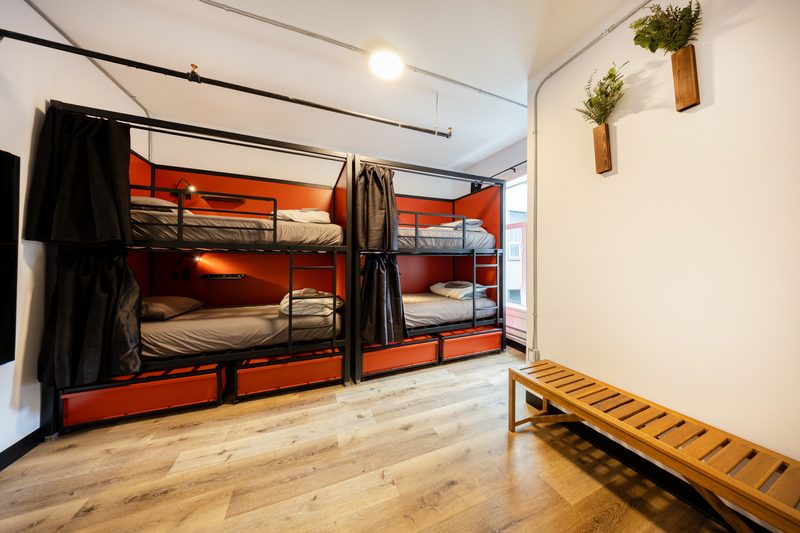
Hostels
CAD $35-70 per night for dorms; CAD $90-140 for private rooms
Half a dozen well-run hostels in the Downtown and Gastown corridor serve solo travelers and backpackers year-round.
Best for: Solo travelers, backpackers, and anyone wanting organized walking tours, social common areas, and self-catering kitchens.
Private hostel rooms sell out four to six weeks ahead in July and August. Dorm beds remain available much closer to arrival.
Boutique Inns and B&Bs
CAD $100-220 per night
The Sylvia Hotel and Buchan Hotel in the West End represent a small stock of character inns beloved by returning visitors.
Best for: Couples and repeat visitors who want neighbourhood personality and owner-managed character over corporate polish.
West End inns accept direct bookings. They frequently match or beat third-party platform rates while offering more flexible check-in arrangements.
Vacation Rentals
CAD $120-350 per night depending on size and location
Self-catering suites in Yaletown and Kitsilano suit longer stays, though short-term rental regulations have reduced supply.
Best for: Families, groups of three or more, and stays longer than five nights where kitchen access changes the daily cost equation.
Vancouver short-term rental rules require hosts to be principal residents of the property. Verify that any listing carries a valid city licence number before committing.
Booking Tips
Insider advice to help you find the best accommodation.
Coal Harbour and Gastown fill first in summer
Fairmont Pacific Rim and Pan Pacific rooms disappear six to eight weeks ahead of July and August weekends. Gastown boutiques like Skwachàys Lodge fill nearly as fast during the Vancouver Jazz Festival in late June. For summer arrivals in either neighbourhood, locking in a reservation before June 1 is the reliable approach.
North Shore stays available later in the season
Lonsdale Quay Hotel and the other North Shore properties rarely sell out even at peak summer. Walk-in rates match online prices through September and October, when clear skies make the mountain views the sharpest of the year and the trails above the city are free of summer crowds.
West End inns reward direct booking
The Sylvia Hotel and Buchan Hotel negotiate directly with guests. Rates on their own websites typically match or beat third-party platforms and come with perks such as flexible luggage storage and relaxed check-in that aggregators cannot guarantee.
When to Book
Timing matters for both price and availability.
High Season
Reserve six to eight weeks ahead for July and August, for Coal Harbour luxury properties, Gastown boutiques during the Jazz Festival, and the West End over Pride weekend in late July.
Shoulder Season
April through June and September through October offer Vancouver at its most pleasant. Cherry blossoms in March and April. Dry golden September light. Rates meaningfully cheaper than peak summer across every neighbourhood.
Low Season
November through March brings the lowest hotel rates across the city, with easy availability almost everywhere except ski-season weekends in February when Whistler-bound travelers fill Downtown and Coal Harbour.
Six weeks covers peak summer for any neighbourhood. Two weeks works comfortably for spring and autumn. Walk-ins are feasible most of the year outside July and August.
Good to Know
Local customs and practical information.
Check-in / Check-out
Standard check-in is 3pm or 4pm. Check-out is 11am or noon. Nearly all Vancouver hotels store luggage free of charge for early arrivals and late departures, making same-day sightseeing straightforward.
Tipping
A small daily tip left on the pillow for housekeeping is customary across all hotel categories. Vancouver restaurants expect a generous tip at sit-down meals. Leaving nothing at a full-service restaurant reads as a formal complaint rather than indifference.
Payment
Cards and contactless payment are accepted universally across Vancouver, including most market stalls, food trucks, and neighbourhood cafés. Many venues have stopped accepting cash entirely.
Safety
Vancouver is generally safe for visitors. The Downtown East Side, roughly the area north of Hastings Street between Main and Carrall streets, has a persistent street level drug scene. Exercise awareness at night. Every hotel district covered in this guide sits outside that zone.
Ready to plan your trip to Vancouver?
Now that you've got the research covered, here's where to go next.